All Document - File Viewer
- 3.2
- Rating
- 100.00K
- Installs
- Free
- Price
 Analysis by App-foxy
When I need to open a document quickly on a phone, I usually care less about a long feature list and more about whether the app gets out of the way. That is the main appeal I found in All Document - File Viewer: it is a straightforward tools app from AinulMardhiyah, aimed at opening, reading, and managing documents without making the task feel bigger than it needs to be. It is free, suitable for everyone, and the current release is version 1.0.
My overall impression is cautious but positive. The app can be useful as a general document companion, especially when I am moving between files on a mobile device and do not want to rely on a full office suite. At the same time, its modest average rating of 3.2 shows that it is not a universally smooth experience. I would consider it a practical utility to try, not an automatic replacement for a mature document platform.
How All Document - File Viewer fits into everyday document work
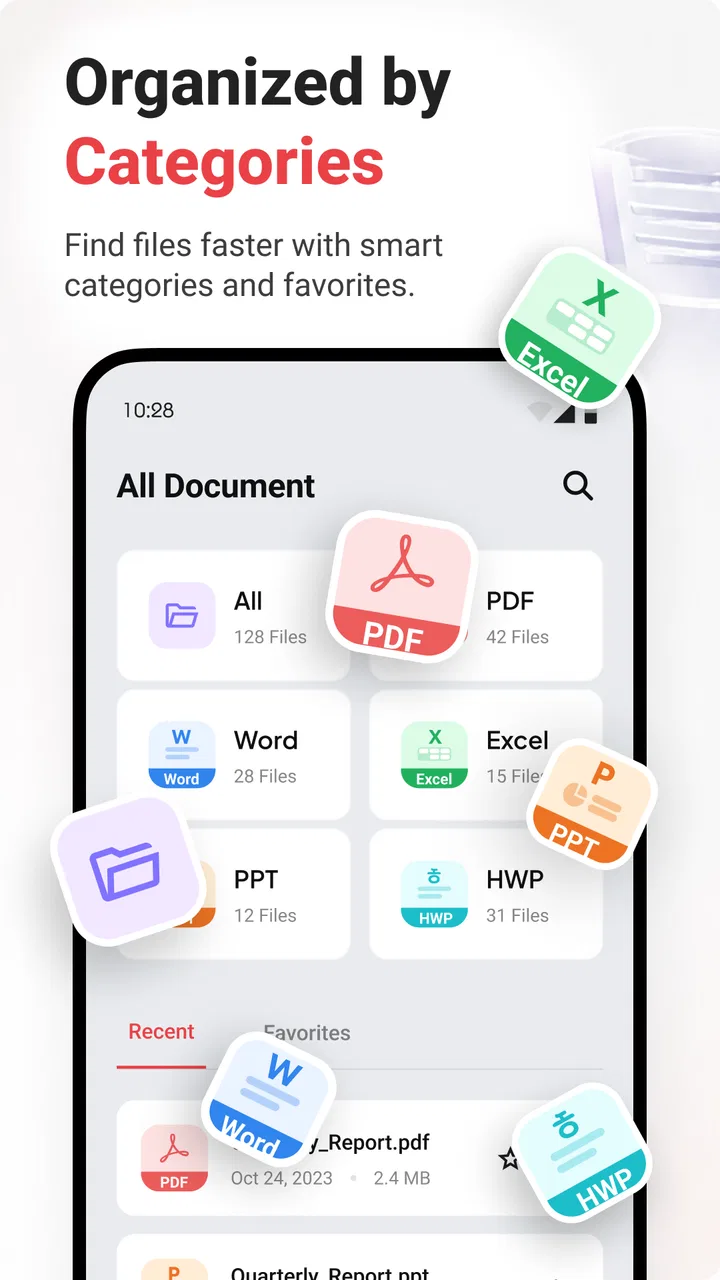
The app belongs to the tools category, which makes sense because its purpose is functional rather than creative. I would reach for it when I receive a document and want to inspect it, when I need to locate a file among several folders, or when I want one place for basic document handling instead of installing a separate viewer for every format. Its store summary presents the experience as opening, reading, and managing documents with ease, and that focus is reflected in how I think the app should be used: quick access first, advanced editing second.
You May Also Like

 Blood Strike: 2.5 Anniversary
Blood Strike’s Loadouts Turn Every Drop Into a Tactical Gamble
A close look at Blood Strike’s custom loadouts: how fast access to signature weapons reshapes its battle royale rhythm, rewards preparation, and narrows the gap between fights.

 Pandora - Music & Podcasts
Pandora’s Music Is Easy to Start, but Harder to Recover
Pandora’s strength is its low-effort path from a seed to a station. Its weak spot is how much confidence it asks you to place in connection, setup, and quiet recovery.

 8 Ball Pool
 Is Built on Rivalries, Rematches, and Routine
A close look at the rivalries, rematches, shared routines, and unanswered safety questions that turn a quick pool match into a persistent mobile community.

 Samsung Music
’s Quiet Strength Is Playing What You Already Own
Its reach comes less from spectacle than from dependable access to a personal library. That simplicity is both the app’s strongest retention engine and its ceiling.

 AccuWeather: Weather Radar
AccuWeather Review: A Quick, Clear Forecast for Everyday Decisions
For everyday plans, the best forecast is the one you can understand quickly. AccuWeather makes rain timing, radar, and local conditions easy to act on, with a few trade-offs.

 Hill Climb Racing
Why Hill Climb Racing Still Turns Crashes Into One More Run
A tiny car, a bumpy hill and one more upgrade: Hill Climb Racing keeps resurfacing because its simple chaos makes every near-miss feel personal.
More From Our News Desk



That distinction matters. A file viewer is not necessarily an office editor, cloud workspace, scanner, or collaboration platform. If I only need to read a document, a lighter tool can be more comfortable than an application filled with editing ribbons, templates, accounts, and sharing prompts. If I need to revise layouts, track changes, sign forms, or collaborate with colleagues, I would look toward a dedicated office app instead.
The developer, AinulMardhiyah, keeps the product identity simple. There is no need to learn a complicated workflow before attempting a basic task. For a person who mainly wants to open a document from a phone, that simplicity is a reasonable starting point. The trade-off is that a simple identity can also leave demanding users wanting more control.
Where connectivity changes the first impression
The most important connectivity question is not whether the app looks useful in a store listing, but what happens at the exact moment I need a file. A document may arrive through email, messaging, a browser download, or cloud storage. In those situations, the network is often involved before the viewer even gets a chance to display anything. I therefore treat the app and the source of the file as two separate parts of the workflow.
If the document has already reached my device, opening it is a different situation from retrieving it from an online service. That distinction is worth remembering because a viewer can be perfectly convenient for local files while the surrounding process still depends on a connection. I would not plan an important trip or presentation around an assumption that every document will always be available without checking the file beforehand.
A useful habit is to open any important document while the connection is reliable, then make sure I know where it is stored on the phone. This is not a claim about a special offline mode; it is simply sensible preparation. It prevents a last-minute search through an inbox or cloud account when the signal is weak. For travel, commuting, or crowded venues, that small check can matter more than a long list of extra settings.
Practical mobile situations where it makes sense
I can see the app being useful for a student who receives reading material in several messages and wants a single viewer for checking pages on a phone. It also fits a worker who needs to inspect a document before forwarding it, or a family member who receives a form and only wants to read the contents before deciding what to do next. In each case, the value comes from reducing friction between finding a file and understanding it.
One realistic example is a person waiting outside an appointment with a document sent earlier by email. Instead of opening a full productivity suite and navigating through editing tools, the person can use a dedicated viewer-style app to inspect the file, confirm that the pages are correct, and decide whether it needs attention. The important preparation is to download the document while connected and avoid treating the viewer as a substitute for the email or storage service that delivered it.
On a smaller phone screen, reading comfort becomes part of the experience. I would zoom carefully rather than repeatedly pinching every paragraph, and I would rotate the device when a page is wider than the display. If the app provides a file-management view, keeping documents in clearly named folders should make later retrieval easier than relying on a long stream of recent downloads.
Another non-obvious use is temporary triage. When several documents arrive together, I can use a viewer to decide which ones deserve a closer look before opening them in a heavier editor. That saves time and reduces the temptation to install multiple apps just because different files came from different people. The trade-off is that triage is not the same as verification: important forms, contracts, or financial documents still deserve careful inspection in a trusted workflow.
Managing files without creating a new mess
The word “manage” in the app’s positioning is useful, but I would approach it with realistic expectations. On a phone, document management often means finding, opening, sorting, and deciding what to keep. It does not automatically mean a complete filing system. I would begin by creating a simple routine: save documents with recognizable names, separate personal and work files, and remove duplicates after confirming which copy is current.
This approach helps because mobile downloads can become confusing quickly. A file named with a generic attachment label is harder to recognize later than one that includes its subject and date in ordinary language. Even if the app makes browsing easier, good naming remains the stronger long-term solution. The viewer can help me access documents, but it cannot replace a sensible filing habit.
I would also avoid using a document viewer as the only place for irreplaceable material. For an important certificate or signed form, I prefer keeping a second copy in a trusted storage location. That is not a criticism of this particular app; it is a general mobile safeguard. A viewer is convenient for access, while backup is about recovery, and those are different jobs.
What happens when a file or connection causes trouble
Everyday document problems are often caused by the file itself, the download process, or the phone’s available resources rather than by the viewer alone. A partially downloaded document may fail to open. A damaged attachment may behave differently from a complete copy. A large or complicated file may take longer to display than a simple text document. When something goes wrong, I would first check whether the file opens from its original source and whether a fresh copy can be obtained.
My recovery sequence would be deliberately simple:
Confirm that the document finished downloading instead of opening a preview that is still incomplete.
Try the file again from its saved location rather than repeatedly tapping an old notification.
Check whether another copy of the same document behaves differently.
Restart the app and, if necessary, the phone before assuming the document is unusable.
Use a dedicated alternative viewer when the file is business-critical or needs specialized rendering.
This sequence is especially helpful when connectivity is unstable. A failed online retrieval can look like a document problem, while a damaged local copy can look like a network problem. Separating those possibilities saves time. I would not keep retrying the same action on a weak connection and expect a different result; obtaining a complete copy first is usually the more practical step.
The app’s version 1.0 status also shapes my expectations. A first release can be perfectly adequate for basic viewing, but I would allow for rough edges in file handling, navigation, or compatibility. That is one reason I would test it with ordinary documents before trusting it for urgent work. A quick personal trial can reveal whether the files I actually use behave as expected.
Using it carefully when mobile data matters
Document tasks can quietly consume data when files are retrieved repeatedly, especially if I keep reopening them from an online source instead of working from a saved copy. I would therefore download important material once over a dependable connection, then avoid unnecessary re-downloads. This is a practical way to control usage without making assumptions about how the app itself handles network traffic.
Large documents deserve extra care. If I am on a limited mobile plan, I would postpone nonessential downloads until Wi-Fi is available and avoid opening several copies of the same file. I would also review the phone’s storage because a viewer cannot be comfortable if the device is nearly full. Keeping only the documents I still need reduces clutter and makes it easier to identify the correct version.
Privacy is another reason to be deliberate. Documents can contain addresses, school records, workplace information, or personal forms. I would avoid opening sensitive files on a borrowed phone, and I would think twice before sending copies through an unfamiliar service just to make them easier to view. The app’s simple purpose does not remove the responsibility to handle the documents carefully.
A useful trade-off appears here: convenience favors keeping files close at hand, while caution favors limiting unnecessary copies. My preferred middle ground is to retain the working document in a clearly marked location, keep a backup where appropriate, and delete temporary downloads once the task is finished. That routine is more valuable than treating any viewer as a complete document-security system.
Who should try it, and who should choose something else?
I think this app is worth trying for readers who want a free, uncomplicated document tool and mainly read files on Android phones running version 8.0 or later. It is also a reasonable candidate for people who dislike installing a large office suite for a task that begins and ends with viewing. The age rating of Everyone makes it broadly accessible for ordinary household use.
The app has reached over 100 thousand installs, so it is not an unknown experiment with no audience at all. Still, the average rating and the relatively small body of written feedback suggest that I would keep expectations measured. Popularity can show that people are trying an app, but it does not guarantee that every file type or phone behaves equally well.
I would skip it if my main requirement is advanced editing, collaborative work, dependable business workflows, or specialized document rendering. In those cases, a well-established office suite or a viewer designed around the exact format may be a better choice. I would also look elsewhere if I need a clearly defined cross-device system, because a basic mobile viewer is not automatically a replacement for a full cloud workspace.
The strongest case for installing it is narrow and practical: I want a free tool for opening and handling documents on a compatible Android device, and I am willing to test it with the files that matter to me. The weakest case is installing it while expecting a complete replacement for every document app already on the phone.
My connectivity verdict
After looking at the app through the lens of real mobile use, I see All Document - File Viewer as a useful access point rather than an entire document ecosystem. Its value is clearest when I already have a file, need to inspect it quickly, and want to avoid the weight of a full office application. The network still matters around that experience: retrieving the file, obtaining a complete copy, and preparing for moments when the signal is unreliable.
My recommendation is to try it with a small set of everyday documents first. Check how easily you can locate files, how comfortable reading feels on your phone, and whether your usual documents open as expected. For important work, keep a backup and have another trusted option available. That approach gives the app a fair chance without making it responsible for tasks beyond its simple viewer role.
In the end, I like the idea of a focused free tool, but I would judge this particular release by consistency rather than ambition. If your needs are basic, it may make document access less annoying. If your needs involve editing, collaboration, or high-stakes file handling, a more mature alternative is probably the safer investment of your time.
FAQs for All Document - File Viewer
01What is All Document - File Viewer used for?
All Document - File Viewer is designed to help you open and read several common document formats from one place. After installing it, you can typically browse files stored on your device, view documents without switching between multiple apps, and organize access through a simple file list. It is especially useful for users who regularly receive office documents, PDFs, presentations, or text files on a mobile device.
02Which file formats can All Document - File Viewer open?
The app is intended to support a broad selection of everyday document types, such as PDF files, Word documents, spreadsheets, presentations, and plain text files. However, compatibility can depend on the exact file extension, document structure, fonts, embedded media, and the app version installed. Before relying on it for professional work, test the specific formats you use most frequently, especially complex spreadsheets or heavily formatted presentations.
03Can I use All Document - File Viewer without an internet connection?
Many document-viewing functions can generally be used offline once the files are already saved on your Android or iOS device. This makes the app convenient for checking documents while traveling or when mobile data is unavailable. Internet access may still be required for downloading attachments, accessing cloud locations, displaying advertisements, updating the application, or using features that depend on online services.
04Does All Document - File Viewer allow editing and sharing documents?
All Document - File Viewer is primarily focused on opening and reading files rather than replacing a full office suite. Depending on the version, it may provide tools for sharing documents through other installed apps, renaming files, or performing basic file-management actions. More advanced editing, formatting, spreadsheet formulas, or presentation creation may require a separate office application, so users should not assume that viewing support includes complete editing capabilities.
05Is All Document - File Viewer safe and suitable for private documents?
As with any file-management or document-viewing application, you should review the permissions requested during installation and only grant access that is necessary for selecting or displaying your files. Avoid opening sensitive documents on shared devices, and check the developer’s privacy policy to understand how information is handled. Before downloading, also review recent store ratings, update history, and any reports concerning advertisements, data collection, or unexpected behavior.
Pros
- Opens many office
- image
- and text formats in one app.
- Built-in search makes it easy to find files and specific document content.
- Supports quick previews without requiring separate apps for each file type.
- Useful file organization tools help manage documents on a mobile device.
- Can reduce the need to switch between multiple document-viewing applications.
Cons
- Some advanced viewing or editing features may require a paid upgrade.
- Large or complex documents can take longer to load on older devices.
- Formatting may not always display exactly as it does in the original app.
- The app may request broad storage access to scan and manage local files.
- Ads or promotional prompts can interrupt the viewing experience.

All Document - File Viewer
Gallery